
Smart Transportation Big Data: Using Load Data to Improve Road Planning and Maintenance
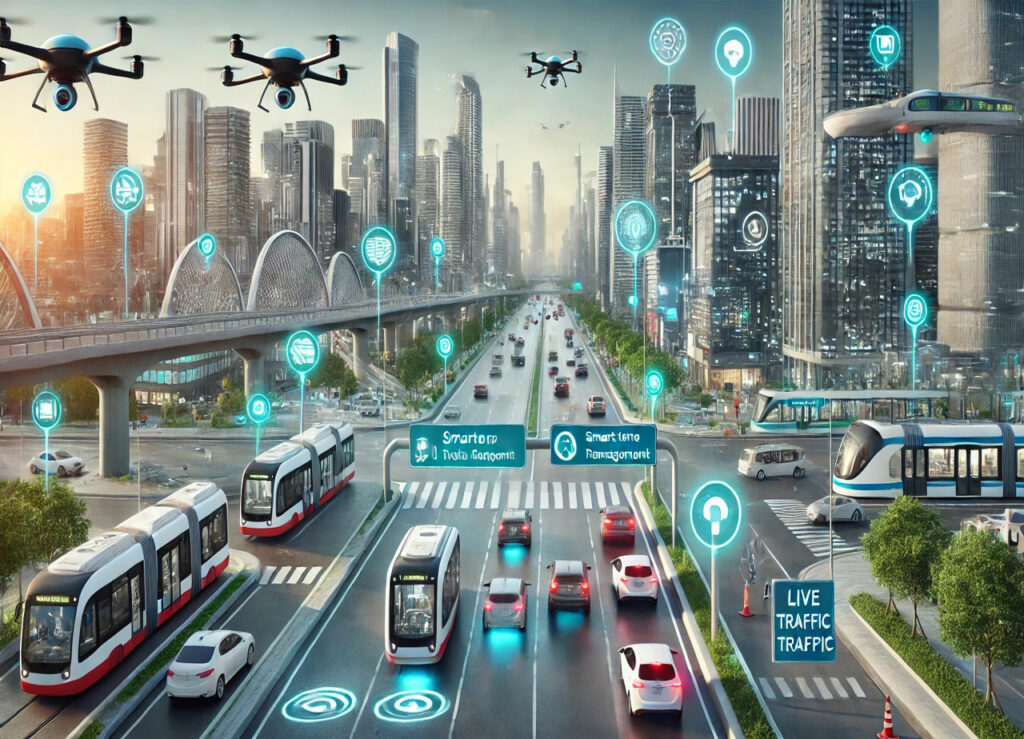
With the acceleration of urbanization, traffic congestion and inefficiency have become serious challenges for many cities. The rise of big data technology has provided new solutions for smart city transportation. By collecting, analyzing, and applying massive amounts of traffic data, big data can not only help traffic management departments make scientific decisions but also significantly improve residents’ travel experience. This article will use practical cases to explore in depth the application of big data in smart city transportation and its positive impact.
Portable weighing systems allow users to measure weight anywhere — from a remote farm to a busy warehouse floor — without sacrificing precision. But how exactly do these systems work? Let’s break it down.
What Is a Portable Weighing System?
A portable weighing system is a mobile device designed to measure weight quickly and accurately without requiring permanent installation. Unlike traditional floor scales or weighbridges, portable systems are lightweight, easy to deploy, battery‑powered, often wireless, and designed for field or on‑site use.
Common types include portable axle scales, portable platform scales, handheld digital scales, and IoT‑enabled smart weighing systems. Their flexibility makes them ideal for industries that need real‑time, on‑the‑go measurement.
How Does a Portable Weighing System Work?
Portable weighing systems rely on several core technologies. Here’s how the process works from the moment weight is applied to the moment data appears on your screen.
1. Traffic flow monitoring and forecasting
Big data technology can collect and analyze information such as vehicle flow, speed, and congestion on the road in real time, providing precise decision support for traffic management departments. For example, in Stockholm, technologies such as roadside monitors, radio frequency identification (RFID), laser scanning, and automatic photography have enabled the automatic identification of all vehicles. Based on this data, the city levies a congestion tax on vehicles entering and leaving the city center during specific times, successfully reducing traffic congestion and greenhouse gas emissions.
2. Intelligent traffic signal control
By leveraging big data and artificial intelligence technologies, intelligent control of traffic lights can be achieved. Based on real-time traffic flow and road condition information, the timing of traffic lights can be automatically adjusted to optimize the efficiency of traffic flow through intersections. For example, the intelligent transportation system developed by Lyon in collaboration with IBM detects and predicts traffic congestion through real-time traffic reports and adjusts traffic signals accordingly to maintain smooth traffic flow. This intelligent signal control not only reduces congestion but also improves traffic safety.
3. Personalized travel services
Based on users’ historical travel data and real-time traffic information, big data technology can provide personalized travel services. For example, in intelligent navigation systems, by analyzing users’ travel habits and preferences, the optimal travel routes and modes of transportation can be recommended, thereby reducing users’ travel time and costs. Furthermore, some cities have launched big data-based public transportation dispatching systems that dynamically adjust bus routes and schedules based on real-time passenger flow, improving the carrying capacity of public transportation.
4. Real-world examples of how big data optimizes the travel experience
1) Smart Transportation Upgrade on Fuxing Avenue, Shijiazhuang In the municipal upgrading project of Fuxing Avenue in Shijiazhuang City, Hebei Province, smart transportation engineering played a crucial role. By deploying multiple subsystems, including a traffic operation emergency detection subsystem, a road defect detection subsystem, and a bridge structure monitoring subsystem, comprehensive monitoring of traffic conditions was achieved. These subsystems, through the collection and analysis of massive amounts of traffic data, provided real-time decision support for traffic management departments. Simultaneously, the smart transportation project also enhanced road safety control capabilities, providing a safer and more convenient environment for citizens’ travel.
2) Comprehensive Traffic Management in Hangzhou’s Binjiang District
The application of big data technology has also yielded significant results in the comprehensive traffic management of Hangzhou’s Binjiang District. By constructing an urban traffic spatiotemporal optimization platform, intelligent identification and analysis of traffic congestion are achieved, enabling targeted management measures. For example, traffic diversion measures are implemented around schools to reduce congestion during morning and evening rush hours; parking management and traffic organization are optimized around commercial complexes to reduce customer complaints. These measures have not only improved traffic conditions but also increased citizen satisfaction with their travel.
5. How to conduct traffic big data analysis
1). Data Collection: Collect real-time traffic data using various sensors, cameras, and other equipment.
2). Data Integration: Integrate traffic data from different sources, formats, and types to form a unified data resource library.
3). Data Processing: Clean, filter, and process the raw data to improve data quality.
4). Data Analysis: Use statistical, machine learning, and deep learning methods to mine and analyze the data, extracting valuable information.
5). Results Application: Apply the analysis results to actual traffic management and operations to achieve optimization goals.
6. Conclusion
The application of big data technology in smart city transportation offers new avenues for optimizing urban traffic management and enhancing residents’ travel experience. By collecting, analyzing, and applying massive amounts of traffic data, we can achieve real-time monitoring and prediction of traffic flow, intelligent traffic signal control, and personalized travel services. These functions not only help alleviate traffic congestion but also improve traffic safety and service quality. Looking to the future, with the continuous development and widespread adoption of big data technology, we have every reason to believe that smart city transportation will become more intelligent, efficient, and convenient.